Antique Tooth Keys
Dr. Wolfgang Busch
Definition of "toothkey": a device for extracting a tooth.
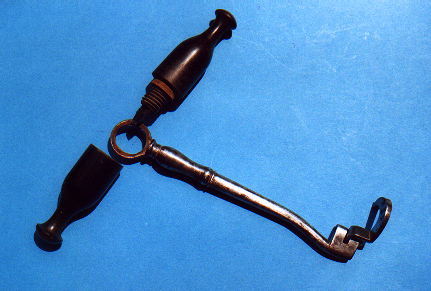
Toothkeys were first mentioned in 1742. Alexander Munroe described in an article entitled " A Description of Surgical Instruments" an instrument which, included with others, is shown in fig.1.
(fig.1)
(fig.2)
There are different names for the tooth key: Clef de Garengeot, Fothergill-Key, English-Key, French-Key and German Key were all used.
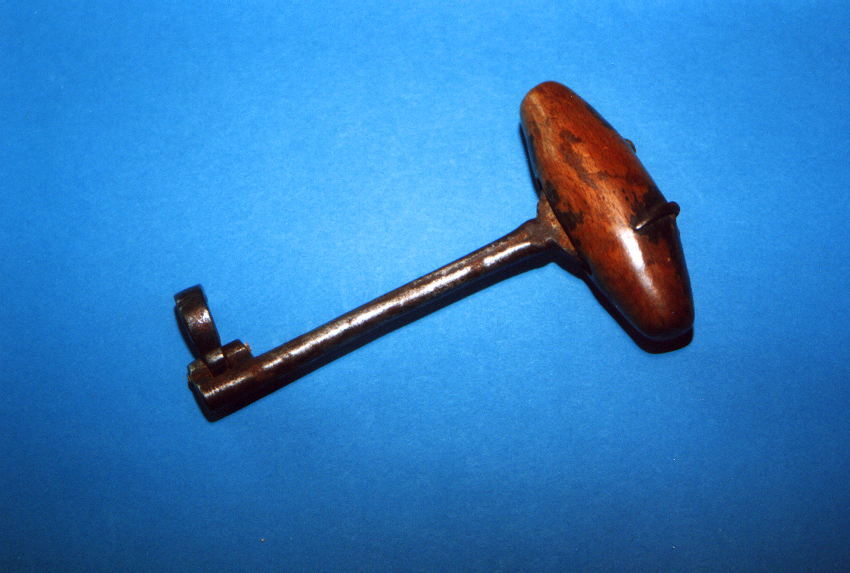
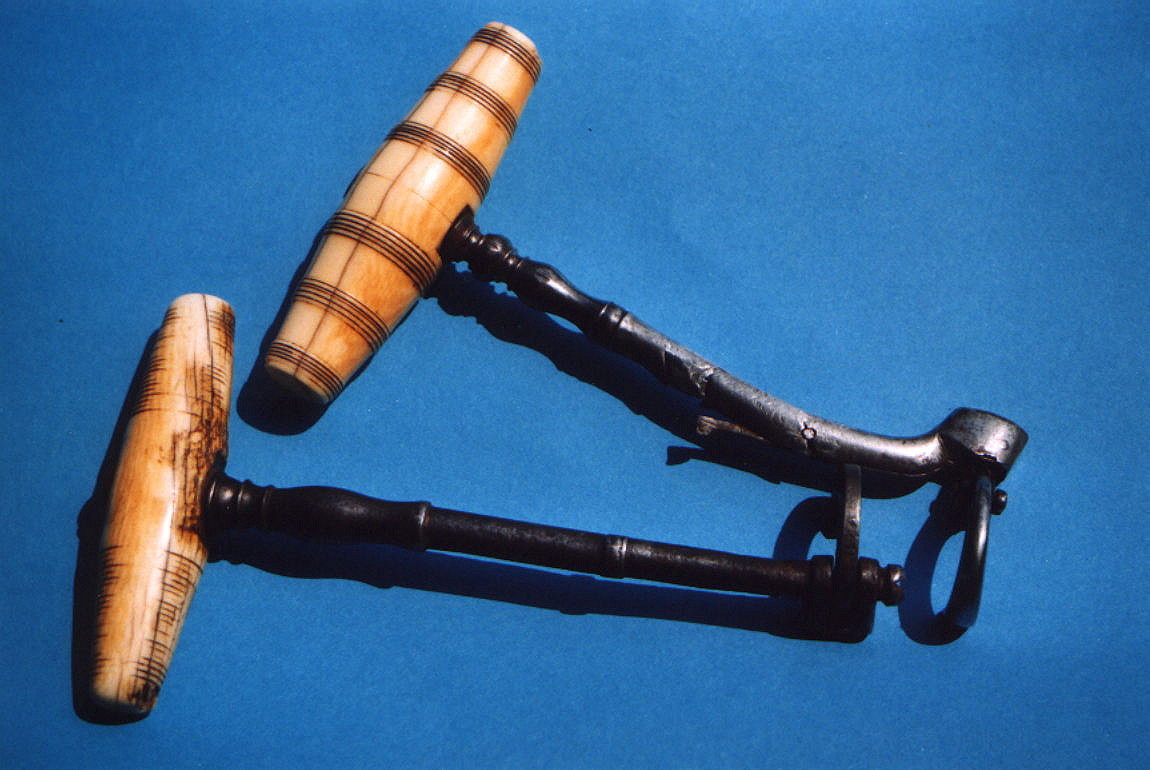
The first examples were made of iron. They have straight unplated shafts with the claw being attached by means of a screw-pin to a small metal projection. The handle is shaped like that of a turnkey, shown in fig.2. The handles, at first plain, evolved and were eventually embellished and made out of horn, ivory, mother of pearl and different woods.
In the second half of the 18th century the toothkey became the most popular instrument for extractions.
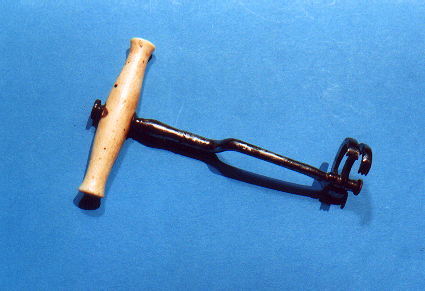
It appeared in different sizes and shapes. Smaller sizes for the treatment of children, shown in fig.3, are not unusual.
(fig.3)
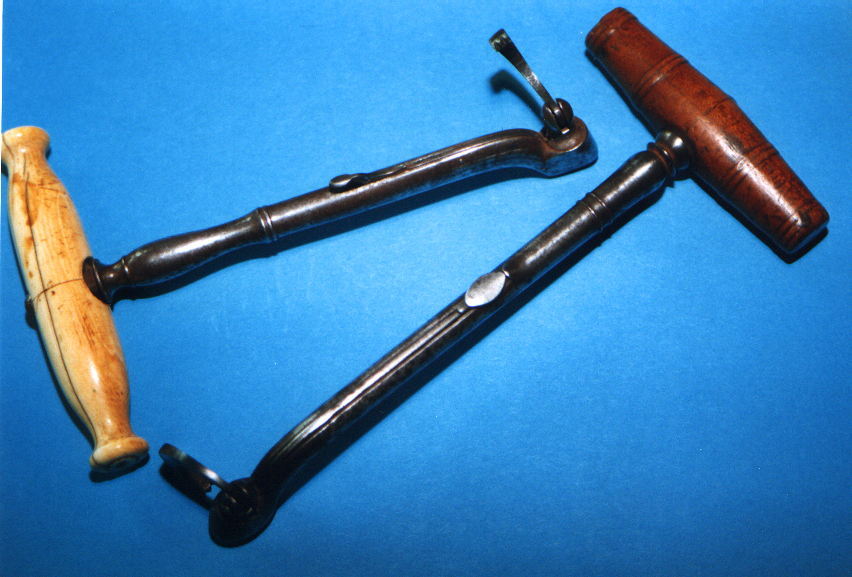
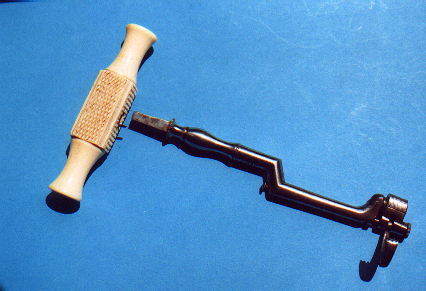
In its 100 years of use the key was developed and improved many times. In the key with a straight shaft ( " Key of old construction " ), the axis of motion is such that the tooth is removed at a right angle to the line of the arch. By using the bolster on the inner side, the shaft is in an oblique direction. Because of that there is a tendency for the claw to exert force in a manner that presses the tooth against the one immediately posterior. Because of this, around 1765, Ferdinand Julius Leber reshaped the straight shaft and introduced a single bend. This improvement reduced the pressure on the proximal tooth. It is shown in fig.4 and is called " Key of common construction ".
(fig.4)
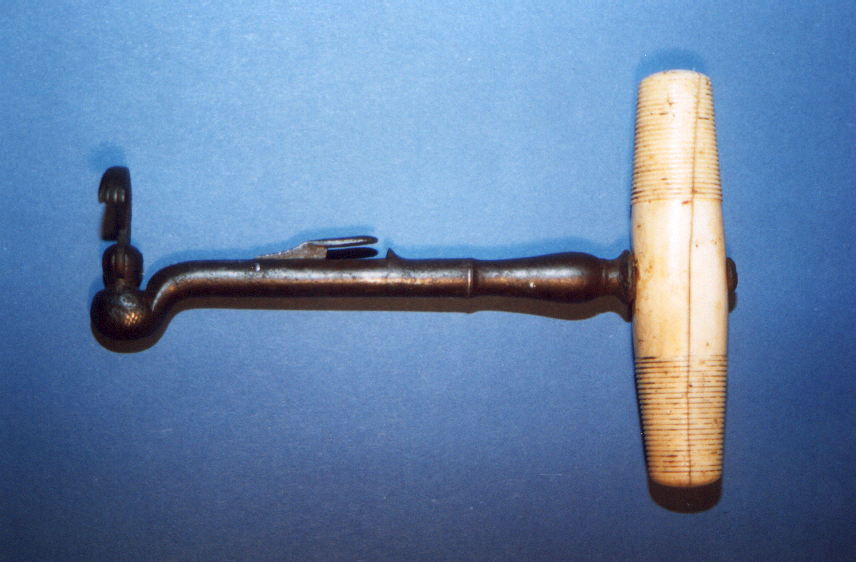
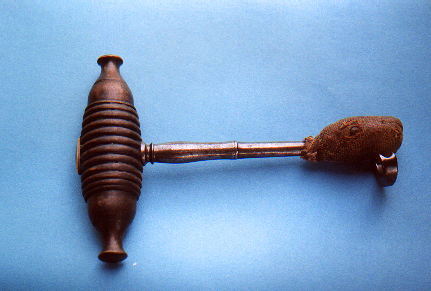
The keys, shown in fig.5 and 6 are very good examples of common construction. Fig.5 shows an ivory handle embellished with twenty four grooves on each side ( feature of Pepy´s craftmanship, ca. 1790). Fig.6 shows an ivory handle embellished with three rows of grooves on each side. This was introduced by Benjamin Bell, 1796. The claw moves on a swivel in the head of the shaft and can be fixed in three positions. It has a large circular bolster with the shaft fixed to the side. The claw can rotate in the bolster and is held in position by a spring catch.
(fig.5)
(fig.6)
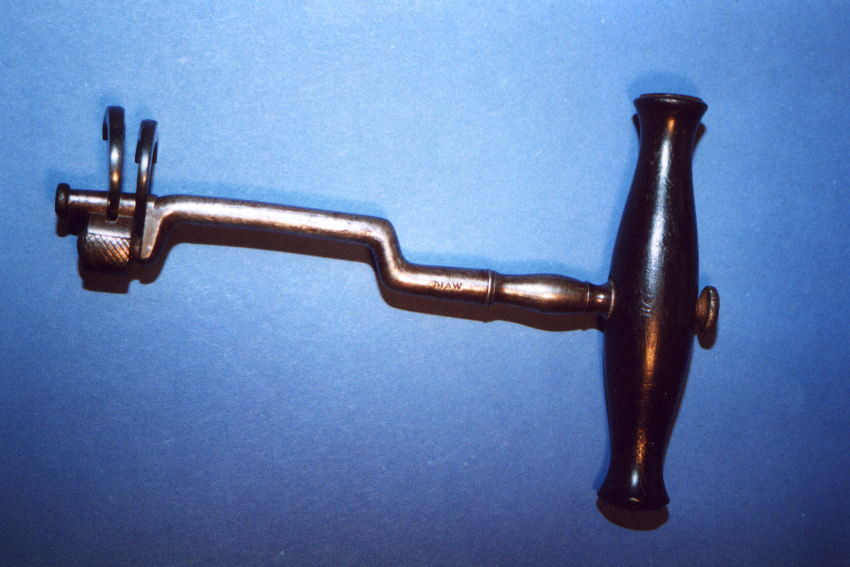
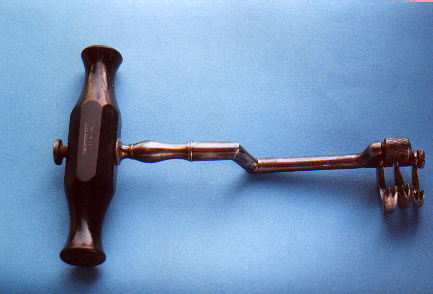
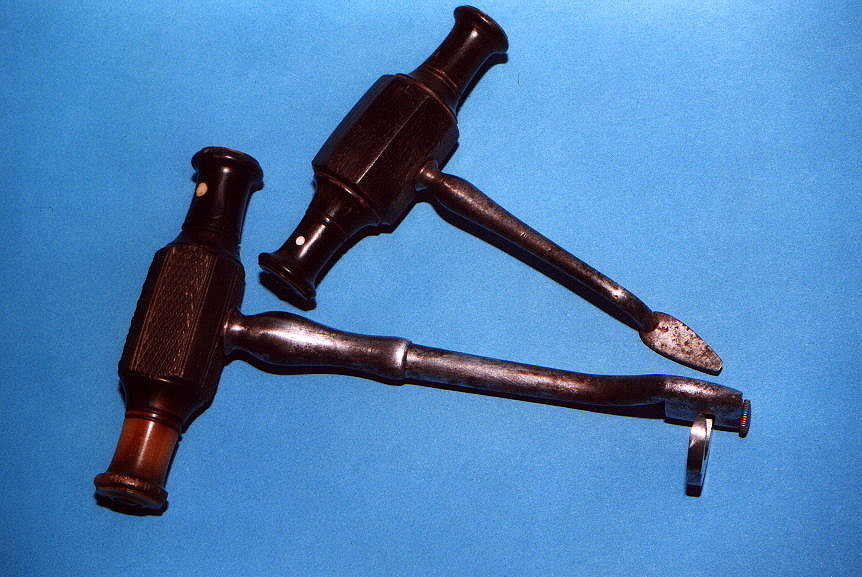
If the shaft has a double bend, the axis of motion is in a straight line through the bolster and the middle of the handle. The teeth can be removed in a curve at a right angle to the line of the arch. This improvement is described as " Instrument of improved construction," introduced by Robert Clark, 1795, and shown in fig.7.
In fig.8 and fig.9 are keys of that type with respectively two and three interchangeable claws illustrated.
(fig.7)
(fig.8)
(fig.9)
Sometimes the handle can be unscrewed from the shaft. Inside the handle is a screwdriver which makes changing of the claw possible, shown in fig.10. This type was later developed and manufactured by Charriere, shown in fig.11.
(fig.10)
(fig.11)
Fig.12 shows an instrument of Benjamin Bell´s, who insisted on the surrounding the bolster with linen or leather to reduce the pressure on the gingival tissue.
(fig.12)
Charles Leforgue introduced a concave bolster and a strongly bended shaft. Different claws are changeable on the same shaft.
Many other innovators made different improvements and variations, each of them proclaimed his kind of key as the " Key of universal use ". But the "universal use " proved ephemeral.
In the second half of the 19th century the concepts of Sir John Tomes, who developed the type of forceps which is sill used today, made the tooth key obsolete.
If you have any questions about antique tooth keys or have some to sell please Contact Dr. Arbittier