 |
|
Click on any photo to enlarge it
|
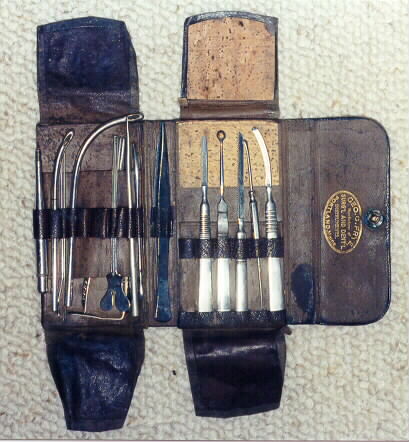
Leather cased surgical sets are small 'pocket' minor surgery kits meant to be carried by the physician for emergency use or while on a house call. If the handles are all metal, it is post Civil War and most likely post-1870. The earlier handles are usually made of horn and are of the folding variety. |
||
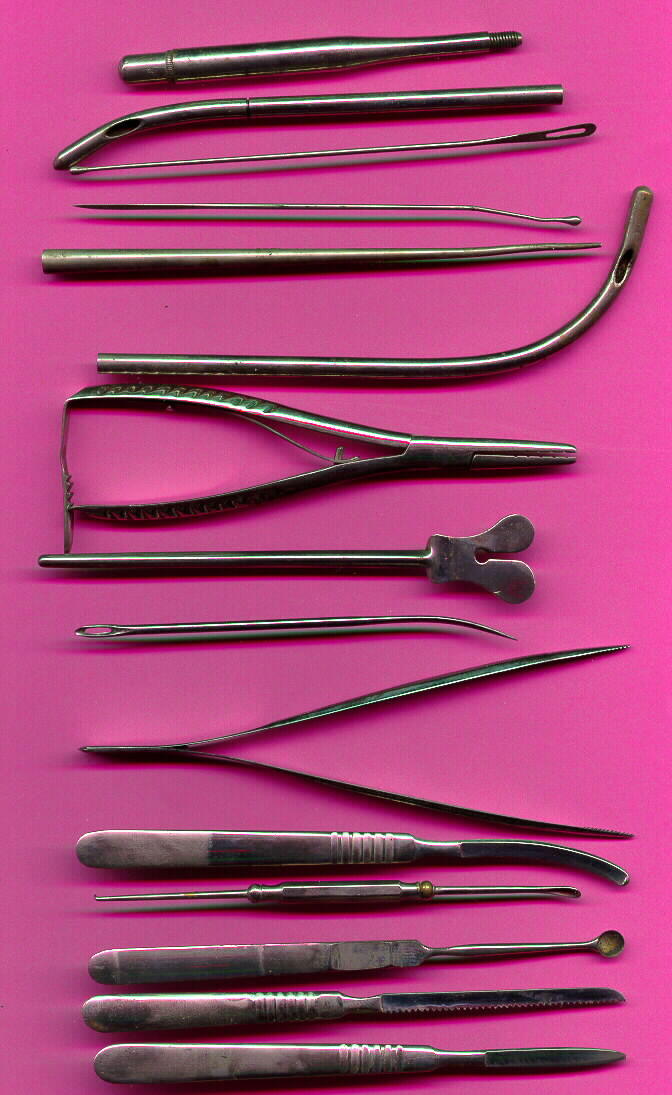
| Pocket surgical kit by George Frye Co., c.1895. Note the all metal handles indicative of post 1880 instruments. |
 |
 |
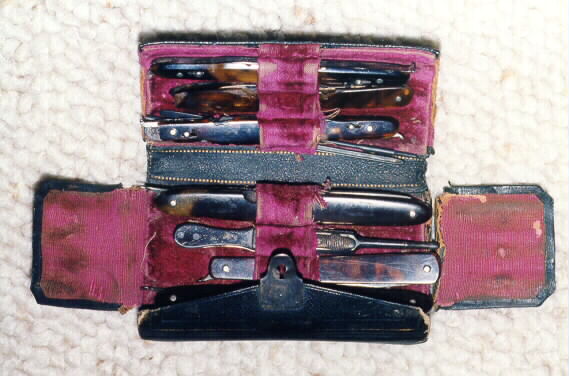
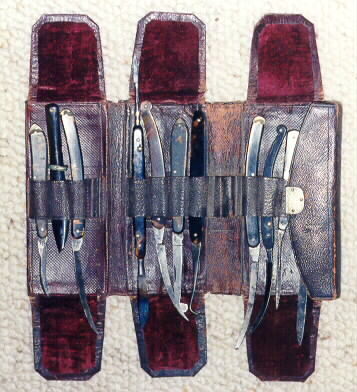
| Pocket surgical kit containing various folding bistouries with tortoise shell handles by Geo. Tiemann, NY, c. 1860's All but one of the bistouries is stamped with the Tiemann mark. Even the forceps are correctly marked as Tiemann. Some of the bistouries have the tortoise shell chipped or fractured. One of the end flaps is off the case. The closing snap is functional. Seven pieces. |
 |
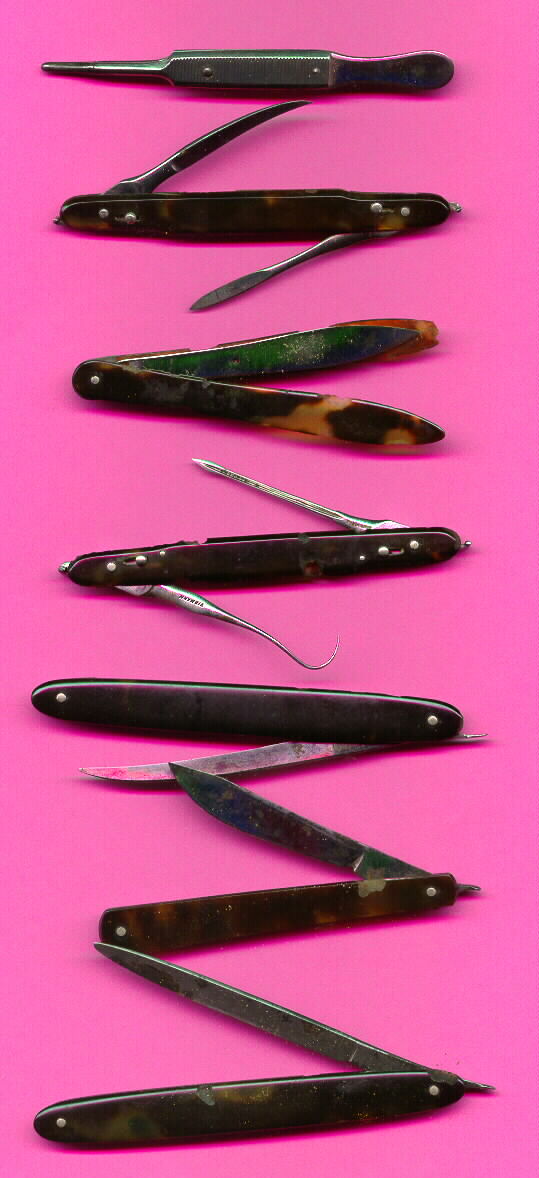 |
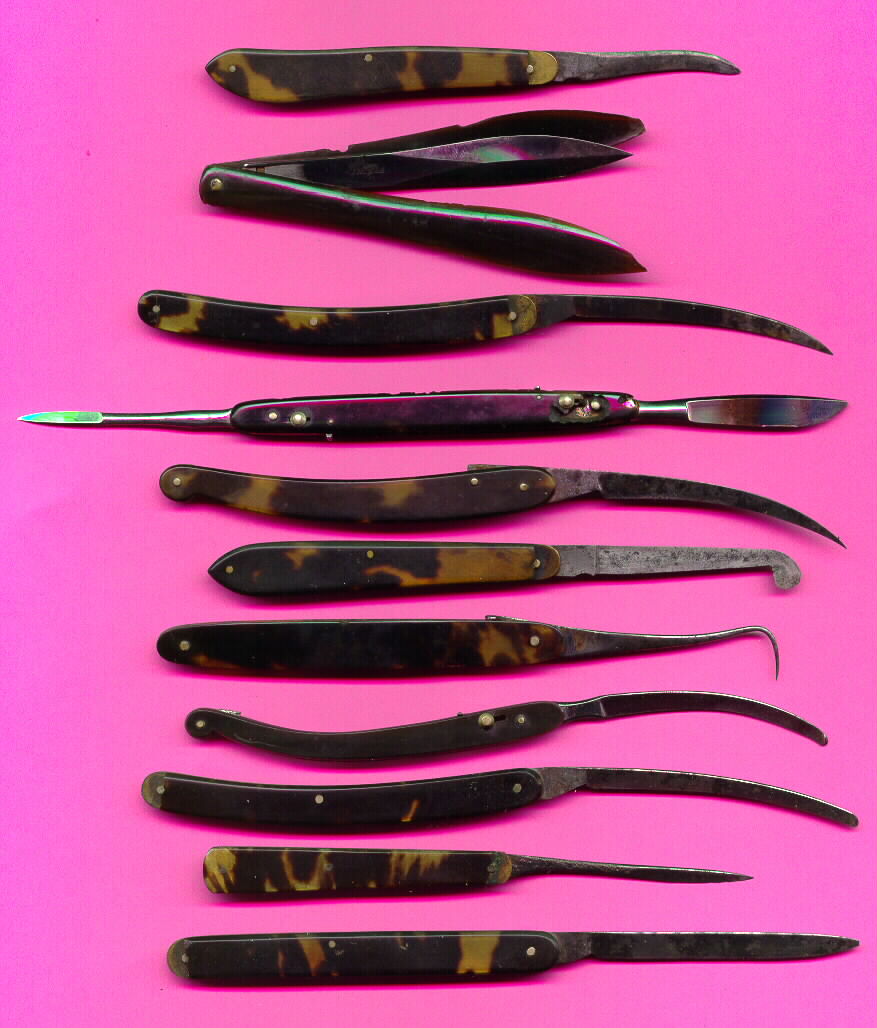
| Various types of physician's bistouries
(folding knives and lancets), c. 1860's 10 pieces.
Makers: John Whyte (5), Dublin; Fischer (3); Tiemann (1) ; F. Liese (1); in various conditions. Latch on case is inoperative. |
 |
|
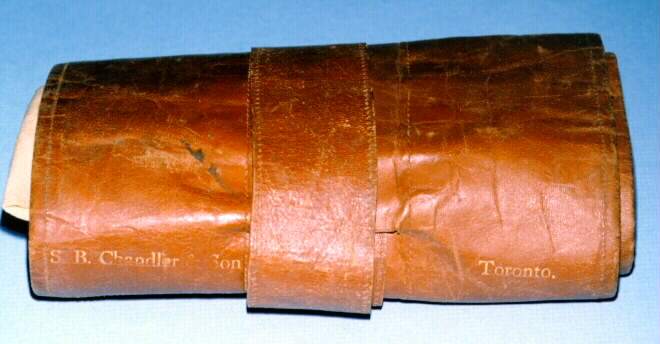
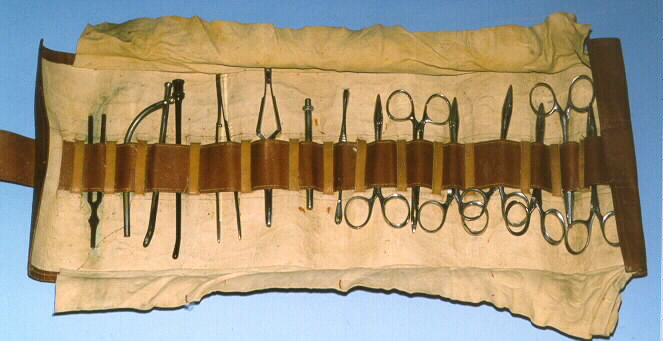
| Leather roll-up surgical case with various instruments. Case is marked S. B. Chandler & Son, Toronto, Ca., but the instruments are marked Stevens & Son, London. c. 1900 |
 |
|
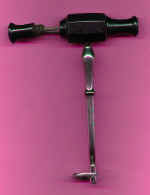
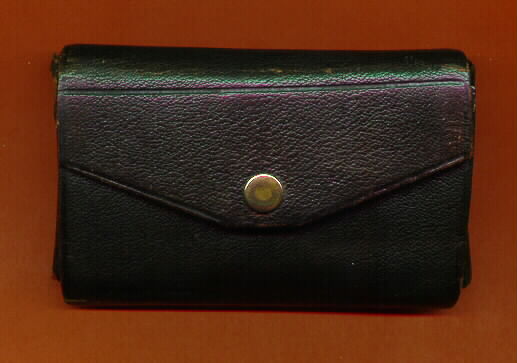
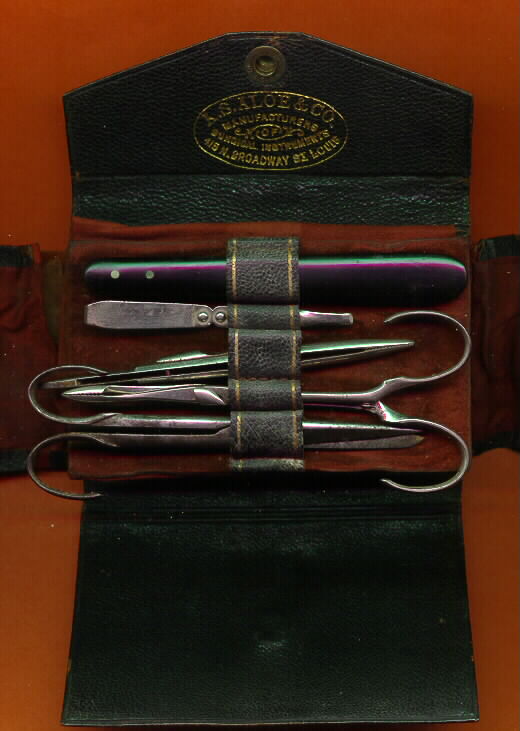
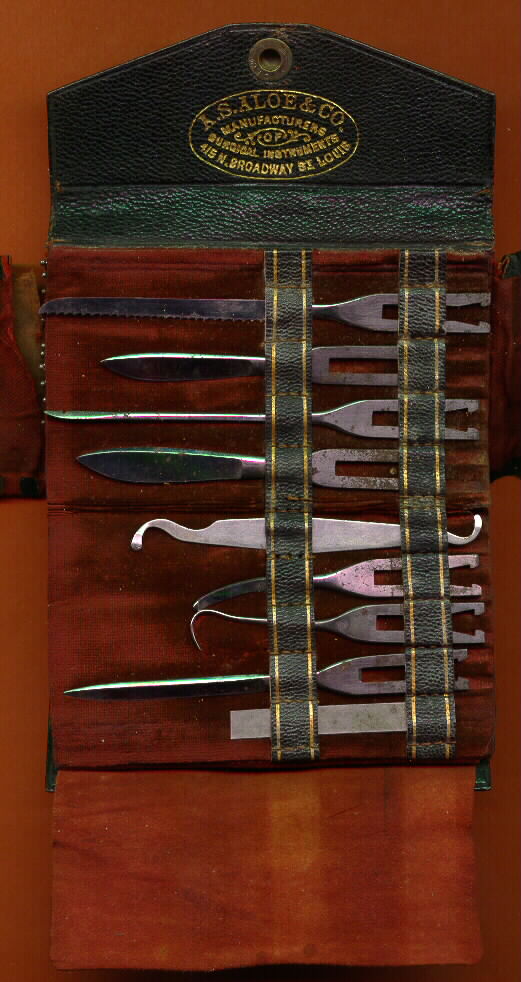
An unusual c. 1890 pocket surgical kit by A. S. Aloe & Co, of St. Louis, Mo. (see Edmonson, page 122) Note the removable handle.
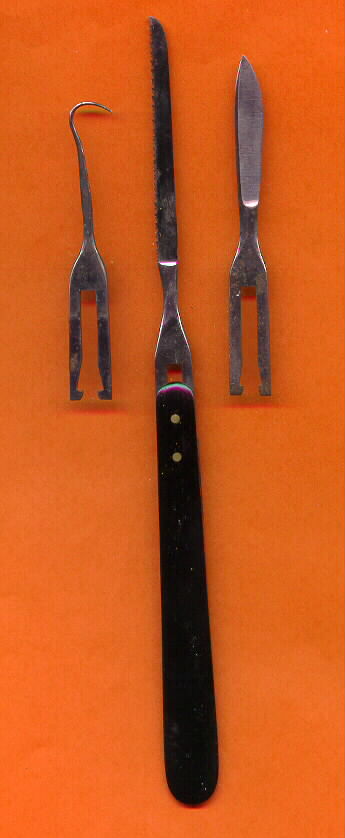
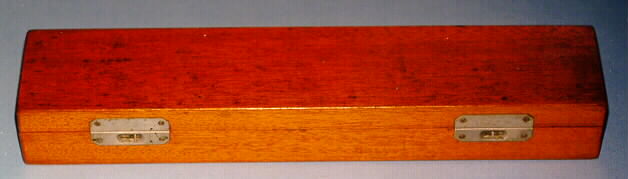
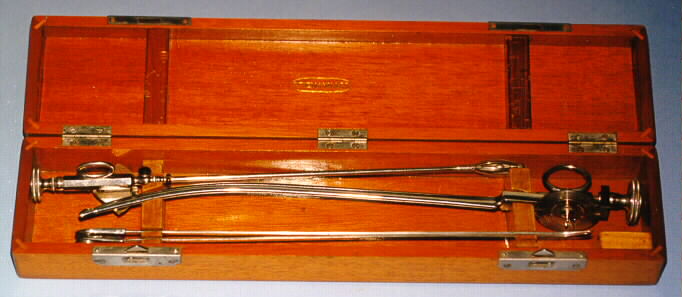
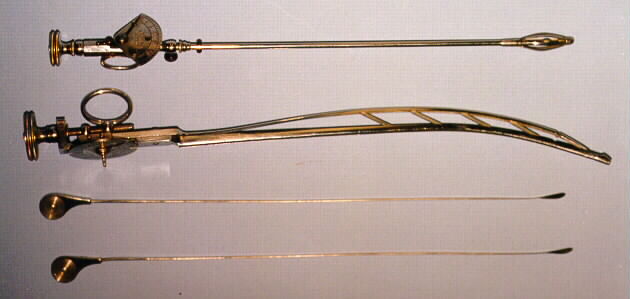
| Urethral dilator by G. Tiemann, c. 1896, Otis type dilator and probe to determine size of constricture due to prostate enlargement or disease. Knives shown at bottom of far photo are inserted to cut strictures. |
  |
 |
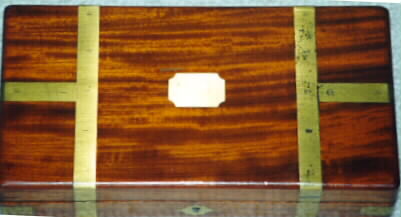
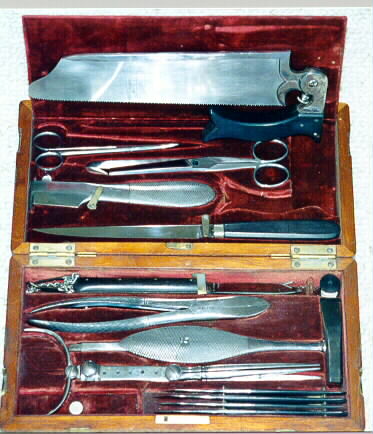
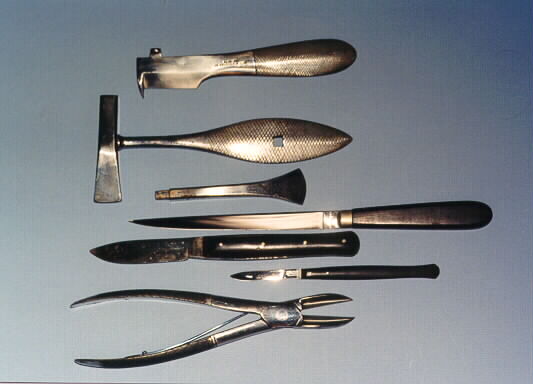
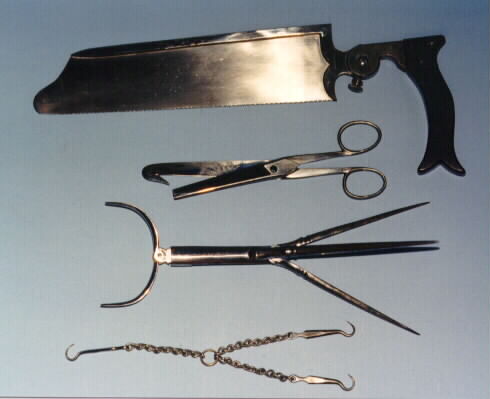
| Post-mortem dissection kit, by Coxeter, English, c. 1870's, includes tripod headrest, bone saw, dissecting bone saw and hammer, heavy bone chisel and tissue retracting chains with hooks. |
  |
|
| Complete Child's tracheotomy kit of ivory and silver, English, c. 1890's, leatherette case, blue velvet lining. Fabric hinge of the leatherette case is broken, otherwise in nice condition and complete. By Kromne & Sesemann |
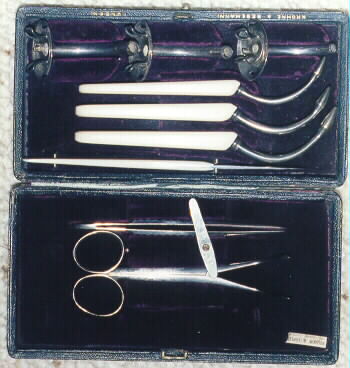 |
| Shepard & Dudley Otis mechanical urethral dilator with expansion indicator, c.1890 | 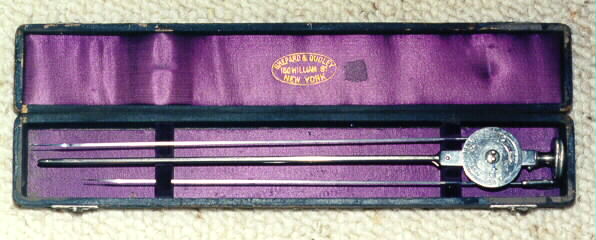 |
| Set of urethral sounds, c. 1895 | 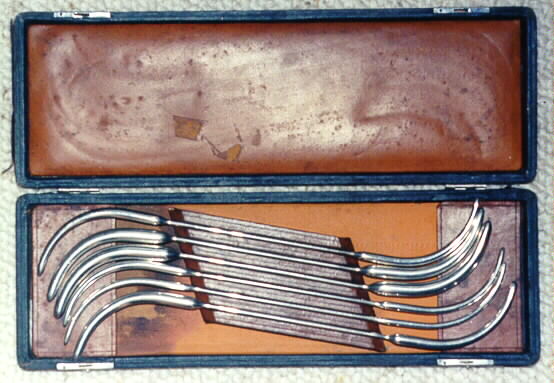 |
Historical note: During the early part of the 19th century, most physicians did dental work related to extractions and the removal of abscesses. The kits with instruments for the manipulation of "filling" materials like gold and silver, were most likely used by dentists. The leather case would indicate a "traveling" doctor.
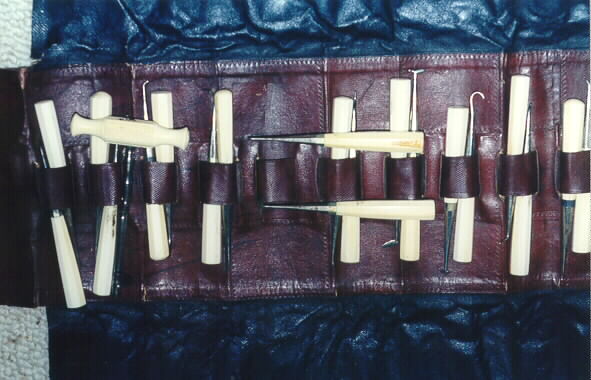
25 piece dental surgery set in a traveling leather case. Ivory handled instruments by Chevalier, NY; includes ivory handled tooth key for extractions, which is not marked c. 1850
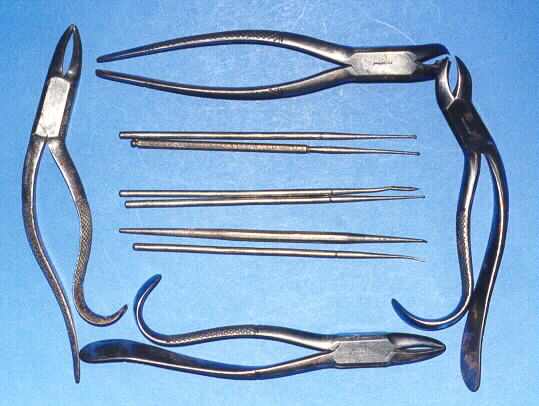
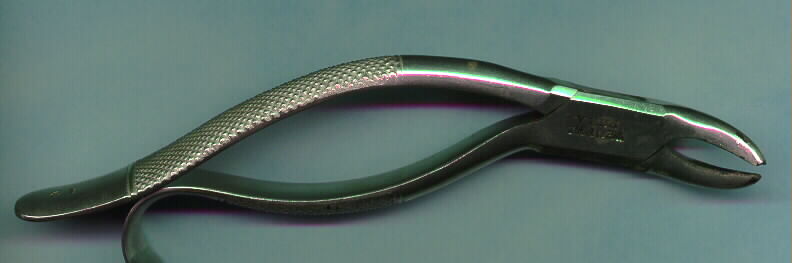
Left: Unplated dental forceps and unplated dental instruments by Chevalier, Brooklyn, c. 1860 Right: forceps by Teufel , c. 1890
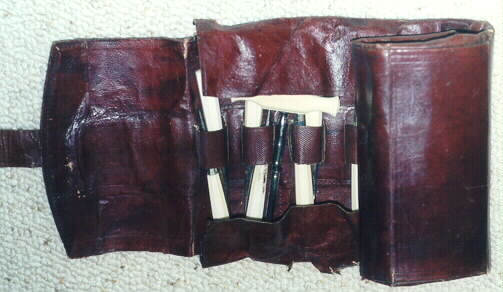
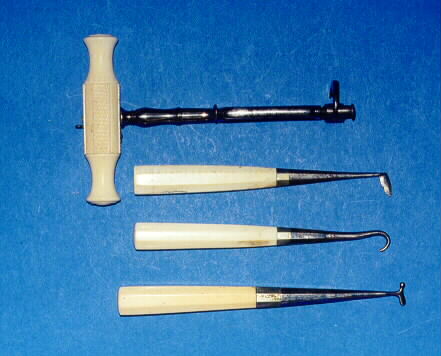
Unusual tooth key with a hidden screwdriver in one threaded handle. Marked Ch. Streisouth, Date unknown. (The screwdriver
was used to change the claw from right to left depending on which tooth was to be the victim. )